Injuries don’t start at the moment they happen. They start long before, when the system begins to demand more than the body can sustain.
Across the NBA, a familiar pattern has started to surface.
Players like Jayson Tatum, Tyrese Haliburton, and Damian Lillard have all dealt with lower-leg injuries tied to cumulative stress.
Individually, these are isolated cases.
Collectively, they point to something else.
A wear pattern.
What’s Changed
The conversation around injuries has shifted.
It’s no longer just about what happens at the professional level.
It’s about what athletes are carrying with them by the time they get there.
Because today’s players aren’t arriving fresh.
They’re arriving experienced.
Where It Starts
For many athletes, that experience begins early.
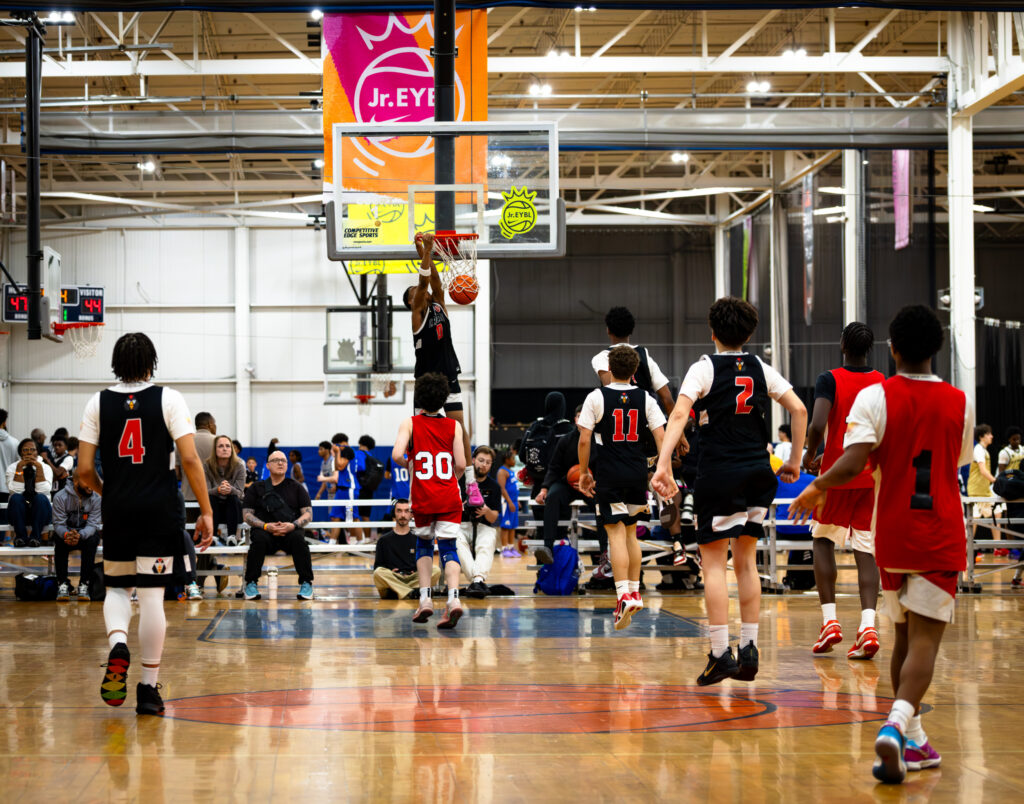
Year-round competition.
Multiple teams.
Limited rest.
By the time some players reach high school, they’ve already logged hundreds of high-intensity games.
Not all of that is visible.
But the body keeps track.
The Structure Gap
At the professional level, workload is monitored.
Minutes are tracked.
Movement is analyzed.
Recovery is built into the schedule.
At the grassroots level, that structure rarely exists.
There’s no consistent system guiding how much is too much.
And in an environment driven by exposure, the default is often to keep going.
What the Achilles Represents
The Achilles tendon doesn’t fail suddenly.
It breaks down over time.
That’s what makes it a useful signal.
Not just of injury, but of accumulation.
Repeated stress.
Limited recovery.
Long-term imbalance.
The Misunderstanding
The assumption is that more work leads to better outcomes.
More games.
More reps.
More visibility.
But development doesn’t always follow volume.
And in some cases, volume works against it.
What Experts Are Seeing
Sports medicine professionals are noticing the shift earlier.
Younger athletes showing signs of overuse.
Fatigue patterns that don’t match their age.
Not because of a single mistake.
But because of consistent overextension.
Why This Matters Now
Youth basketball is more organized than it’s ever been.
More access.
More opportunity.
More pathways to be seen.
But the infrastructure hasn’t caught up.
There are more games.
Not necessarily more support.
What Needs to Change
The solution isn’t less ambition.
It’s better structure.
- spacing competition with recovery
- building strength and mobility alongside skill
- recognizing when development requires pause, not repetition
Because long-term performance isn’t built on constant output.
It’s built on balance.
The Bigger Picture
The game is producing more talent than ever.
But the question isn’t just how good players are becoming.
It’s how long they’re able to sustain it.
Closing
If injuries at the highest level are becoming more visible, they’re not just a professional issue.
They’re a reflection of the path that leads there.
And for families navigating that path, the question isn’t how much more can be done.
It’s whether what’s being done is aligned with how athletes actually develop.