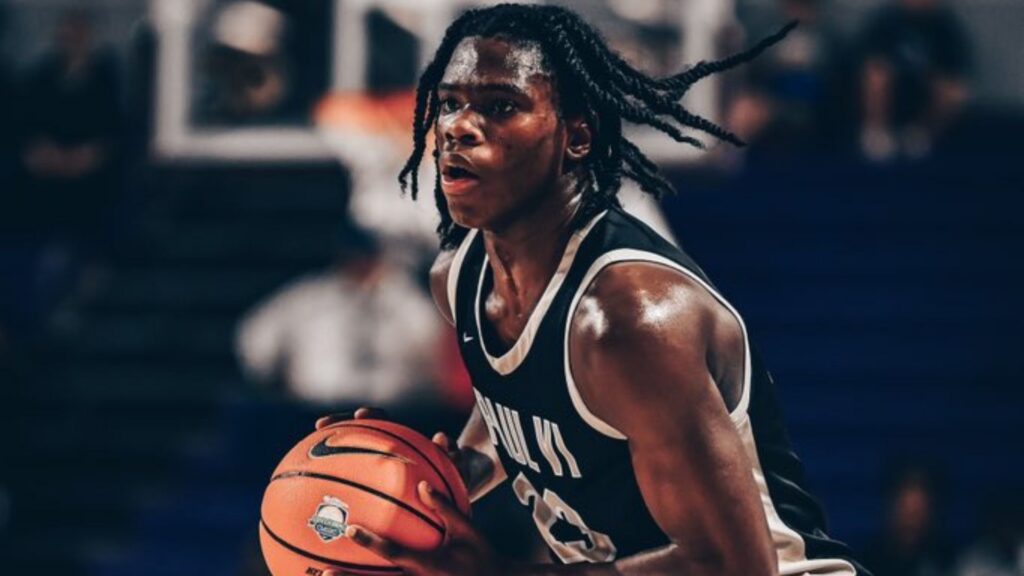
At just 17 years old, AJ Dybantsa already carries himself with the quiet certainty of a veteran. The 6’8” wing out of Utah Prep isn’t just one of the most talked-about prospects in the country — he’s emblematic of a new era in high school basketball: hyper-skilled, highly visible, and meticulously prepared.
Dybantsa, who recently committed to BYU, isn’t following a traditional path — he’s helping redefine it.
Beyond the Rankings
Dybantsa is widely regarded as the No. 1 player in the Class of 2026, with scouts praising his combination of size, fluidity, and scoring ability. But it’s his mindset that sets him apart. Teammates describe him as cerebral. Coaches talk about his work ethic. Trainers call him a “technician.”
“He studies the game in a way that’s rare for someone his age,” said one coach close to the program. “He’s not just athletic — he’s intentional.”
He’s also incredibly adaptable. Whether operating as a primary ballhandler or sliding off the wing, Dybantsa excels in multiple positions, a trait that mirrors the modern demands of both college and pro basketball. And his defensive instincts? Advanced beyond his years.
The BYU Decision
In a recruiting world where blue bloods typically dominate headlines, Dybantsa’s commitment to BYU turned heads. But for those in his inner circle, the choice was rooted in alignment — not hype.
“Fit mattered more than flash,” his trainer told ESC. “He saw a program that believes in development, culture, and long-term vision. That’s what won him over.”
With NIL partnerships now part of the calculus, Dybantsa’s decision also underscores a shift: elite athletes are evaluating programs not just for exposure, but for infrastructure, values, and future-readiness.
Building a Brand — Carefully
With a growing social media following, national media attention, and regular appearances on marquee circuits, Dybantsa could easily get caught up in the noise. Instead, he’s opted for discipline. He limits distractions, focuses on recovery, and keeps his circle small.
“There’s pressure, for sure,” he told ESC after a recent workout. “But I just try to control what I can — how I train, how I play, and how I show up for my team.”
That level of maturity — paired with elite on-court production — has college coaches and brand reps alike paying close attention.
What’s Next?
As he prepares for the next chapter, Dybantsa’s journey is far from over. But his trajectory feels inevitable. He’s not just a top prospect — he’s becoming a blueprint.
And for younger athletes watching from afar, the lesson is clear: greatness isn’t just about talent. It’s about timing, decision-making, and consistency.